When you live in the Olympic Peninsula, your property faces unique environmental challenges. Between the heavy rainfall and shifting soil conditions, maintaining a stable entrance is often a battle against the elements. If you are tired of potholes, mud, and erosion, it is time to rethink your driveway gravel strategy.
Building a reliable driveway isn’t just about dumping rocks on the ground; it is an engineering project that demands attention to drainage and base preparation. Whether you are installing a new path or restoring a failing one, choosing the right driveway gravel and installation method is the difference between a project that lasts decades and one that washes away with the first autumn storm.
The Olympic Peninsula Challenge: Why Drainage Matters for Your Driveway Gravel
In our region, water is the primary enemy of any unpaved surface. Poor drainage doesn’t just make a mess; it destroys the structural integrity of your drive. When water pools beneath the surface, it softens the soil, causing your high-quality driveway gravel to sink into the mud, leading to deep, costly ruts.
Effective water mitigation involves more than just grading. To protect your investment, consider these essential elements:
- Proper Slope: Your driveway needs a consistent crown or cross-slope to shed water efficiently to the sides.
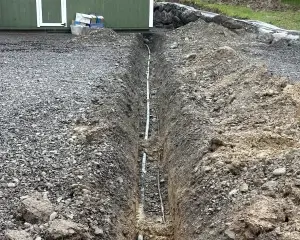
- Sub-surface Drainage: In some areas, installing a curtain drain or French drain alongside your path is necessary to intercept groundwater.
- Material Choice: Using the correct driveway gravel sizes allows for better water percolation, preventing saturation.
Choosing the Right Driveway Gravel for Your Property
Not all stones are created equal. The visual appeal of your entrance matters, but functionality must come first. To create a surface that holds up, professionals often recommend a multi-layered approach using different types of aggregate.
Using the right driveway gravel mix involves balancing stability with drainage:
- Crushed Stone (Base Layer): This provides the “backbone” of your driveway. The angular edges lock together to create a rigid, stable foundation.
- Quarry Process: A mix of stone and dust that compacts incredibly well, minimizing movement and ruts over time.
- Decorative Top Layer: Once the base is solid, you can apply a layer of finer, more aesthetic driveway gravel on top for a cleaner, polished look.
The Anatomy of a Long-Lasting Driveway
A common mistake homeowners make is skipping the preparation phase. You cannot simply lay rocks over dirt and expect durability. A professional installation focuses heavily on what happens under the surface.
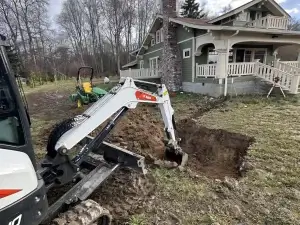
First, the soft topsoil must be excavated to reveal a firm subgrade. Once the ground is leveled and compacted, a geotextile ground cover barrier is installed. This crucial step prevents your driveway gravel from sinking into the subsoil, which is the number one cause of premature driveway failure in our wet climate.
After the barrier is in place, the base material is added in lifts—thin layers that are individually graded and compacted with heavy machinery. By compacting the driveway gravel in stages, we ensure that the entire mass acts as a single, solid unit rather than a loose collection of stones that can easily drift or erode.
Maintenance Tips for Your Driveway Gravel
Even the best-built driveways require occasional care, especially in the Pacific Northwest. While a properly engineered driveway minimizes issues, proactive maintenance can extend the life of your driveway gravel surface significantly.
- Rake Regularly: Use a rake to redistribute stones that have migrated toward the edges or into low spots.
- Address Ruts Early: If you notice small depressions forming, fill and compact them immediately before they grow into larger washouts.
- Refresh the Top Layer: Every few years, you may need a thin “top dress” of fresh driveway gravel to fill in areas where stone has been lost to snow plowing or erosion.
You May Also Like: Unlocking Your Land: How to Clear Winter Debris Without Damaging Your Soil
A Lasting Solution for Your Home
Investing in a well-constructed driveway is about more than just convenience—it is about protecting your property value and ensuring reliable access to your home year-round. By focusing on proper site prep, drainage solutions, and using high-quality materials, you create a robust surface that stands up to the rigors of our local environment.
Are you ready to transform your entrance? If you need expert guidance or a professional evaluation of your property’s needs, we are here to help. Don’t let another rainy season damage your property. Contact our team today for a free estimate and discover how we can build a driveway gravel surface that stays beautiful and functional for years to come.
Is your driveway ready for the next rainy season?
Don’t let potholes and erosion ruin your property’s curb appeal and functionality. At Alpine Earthworks, we specialize in building entrances that withstand the toughest Northwest weather. [Contact us today at 360-797-4904] or click the button below to schedule your free on-site estimate. Let’s build an entrance that lasts for years!
The secret lies in ground preparation and water mitigation. A well-designed driveway requires a proper crown (slope) to shed water efficiently to the sides, often combined with underground drainage solutions like curtain drains or French drains if your soil retains moisture. Without proper water management, any surface will degrade quickly.
The main difference is the sub-grade preparation and compaction. While a DIY project often consists of just dumping stone, a professional approach involves excavating soft topsoil, installing a geotextile ground cover barrier to prevent the gravel from sinking into the mud, and using heavy machinery to compact the material in lifts, creating a solid, durable surface.
With a professional installation and basic maintenance (such as occasional raking to redistribute stones), you may not need a major replenishment for many years. However, a light “top-dress” of fresh driveway gravel every 3 to 5 years is usually enough to maintain a fresh appearance and optimal functionality.
-
We recommend a multi-layered approach. We use crushed stone with angular edges for the base layer, as these lock together for superior stability, and a “quarry process” mix (crushed stone plus stone dust) to create a firm, compact surface. This combination resists heavy traffic and erosion far better than standard rounded river rock.