Starting a new construction project or upgrading an existing property in the Pacific Northwest often begins underground. Navigating the complexities of septic system installation on the Olympic Peninsula requires more than just a shovel; it demands a clear understanding of local environmental regulations and permit protocols.
For homeowners in Clallam or Jefferson County, a properly functioning system is the most critical component of property health. Because much of our region is not connected to municipal sewer lines, your septic system is your private utility, responsible for protecting both your family and the local water table.
Why the Permit Process is Non-Negotiable
Before a single bucket of dirt is moved for your septic system installation, the county must ensure the design is safe for the environment. The Olympic Peninsula is home to sensitive watersheds and unique soil compositions that dictate exactly how waste must be treated.
The permit process exists to prevent groundwater contamination and to ensure your system doesn’t fail prematurely. While it may feel like a series of hurdles, these regulations are designed to protect your long-term investment and the local ecosystem.
- Health and Safety: Preventing untreated effluent from reaching the surface or local streams.
- Legal Compliance: Ensuring your property remains saleable and up to current building codes.
- System Longevity: A permitted, professionally designed system is less likely to experience catastrophic failure.
Step 1: The Critical Soil and Perc Test
The foundation of every successful septic system installation is the “perc” (percolation) test. This evaluation determines how quickly water moves through your soil, which ultimately dictates the type of system you are allowed to build.
In our region, you might encounter anything from fast-draining gravel to heavy, slow-moving clay. A licensed designer or engineer will dig “test holes” to observe the soil layers and depth to the water table or restrictive layers.
- Site Evaluation: A specialist examines the topography to find the best location for the drainfield.
- Soil Logging: Identifying the different strata of soil to determine absorption rates.
- Water Table Checks: Ensuring there is enough vertical separation between the system and groundwater.
Step 2: Professional Design and County Review
Once the soil data is collected, a formal design is drafted. This blueprint must be submitted to the local health department as part of the septic system installation application. The county will review the plans to ensure they meet all setback requirements from wells, property lines, and structures.
Depending on your soil, you may require a standard gravity system, a pressure distribution system, or an advanced treatment mound. Each has different maintenance needs and installation costs, so having an expert guide you through the selection is vital for your budget.
Standard Gravity Systems
These are common in deep, well-draining soils. They rely on gravity to move effluent from the tank to the drainfield trenches.
Alternative Treatment Systems
If your soil is shallow or poorly drained, you might need an ATU (Aerobic Treatment Unit) or a sand mound. These systems “pre-treat” the water before it reaches the soil, allowing for septic system installation on more challenging lots.
Step 3: Preparing the Site for Excavation
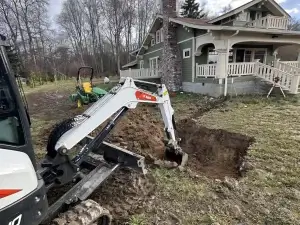
After your permit is approved, the physical septic system installation begins. This is where precision excavation becomes paramount. The site must be cleared of trees and debris without compacting the soil where the drainfield will be located.
Compaction is the enemy of a healthy septic system. If heavy machinery drives over the drainfield area unnecessarily, it can crush the soil’s natural pores, leading to a system that cannot “breathe” or drain, eventually causing a backup.
- Strategic Staging: Keeping equipment on designated paths to protect the absorption area.
- Clearance: Removing stumps and roots that could interfere with pipes or tanks.
- Erosion Control: Ensuring that rain runoff doesn’t wash silt into your open trenches during the build.
Step 4: Installation and Final Inspection
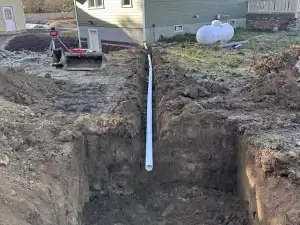
The actual septic system installation involves placing the septic tank, laying the transport pipes, and constructing the drainfield. Every component must be leveled perfectly; even a slight tilt in the tank or a dip in the pipes can cause long-term operational issues.
Once the components are in place, but before they are covered with dirt, a county inspector must visit the site. They will verify that the installation matches the approved permit and that all components are code-compliant. Only after this “final sign-off” can the system be backfilled and put into service.
You May Also Like: The Ultimate Guide to Essential Drainage Services for Olympic Peninsula Homeowners
Protecting Your PNW Investment
A successful septic system installation is a multi-step journey that requires patience, professional expertise, and strict adherence to local laws. By following the permit process and hiring experienced excavators, you ensure your property remains a healthy, functional environment for decades.
Proper planning today prevents the “nightmare scenarios” of tomorrow. If you are ready to start your project or have questions about the unique soil conditions on your lot, we are here to help you navigate every step from the first perc test to the final inspection.
Ready to start your project? Get your site ready for a flawless build. Call us at: 360-797-4904 or reach our team online to schedule your consultation and expert site evaluation.
On the Olympic Peninsula, permit timelines can vary based on county backlog and the complexity of your site. Generally, you should allow 4 to 8 weeks for the design and county review process before excavation begins.
In Clallam and Jefferson counties, most septic work must be performed by a licensed and bonded installer. This ensures that the system meets strict environmental codes and passes the final county inspection.
A perc test measures the drainage rate of your soil. It is a mandatory requirement for septic system installation because it determines if your land can safely process wastewater without it pooling on the surface or contaminating the water table.
The county usually requires a professional inspection every 1 to 3 years, depending on your system type. Regular pumping and avoiding flushing non-biodegradable items will significantly extend the life of your new installation.