When you need a stable base for a shed, RV, or storage building, a gravel pad is one of the most durable, cost-effective, and eco-friendly choices you can make. In a place like Sequim, WA — where soil, drainage, and rain patterns all matter — a properly installed gravel pad can make the difference between a structure that lasts decades and one that quickly settles or shifts.
In this guide, the team at Alpine Earthworks explains everything you need to know about gravel pads in Sequim, including materials, installation steps, local considerations, and when to call a professional.
Why Gravel Pads Are a Smart Choice for Sequim Homeowners
Gravel pads provide a reliable, stable base for sheds, RVs, or small structures without the cost and maintenance of concrete. They allow water to drain naturally, resist cracking, and can be re-leveled easily if the ground shifts over time.
Sequim’s mix of mild weather and seasonal rain makes gravel pads ideal — they handle moisture well, unlike asphalt or poured concrete, which can crack or heave with freeze-thaw cycles.
Common Uses for Gravel Pads
- RV or camper parking
- Storage sheds or small garages
- Tiny homes and portable buildings
- Garden or lawn equipment storage areas
Understanding the Basics: What Is a Gravel Pad?
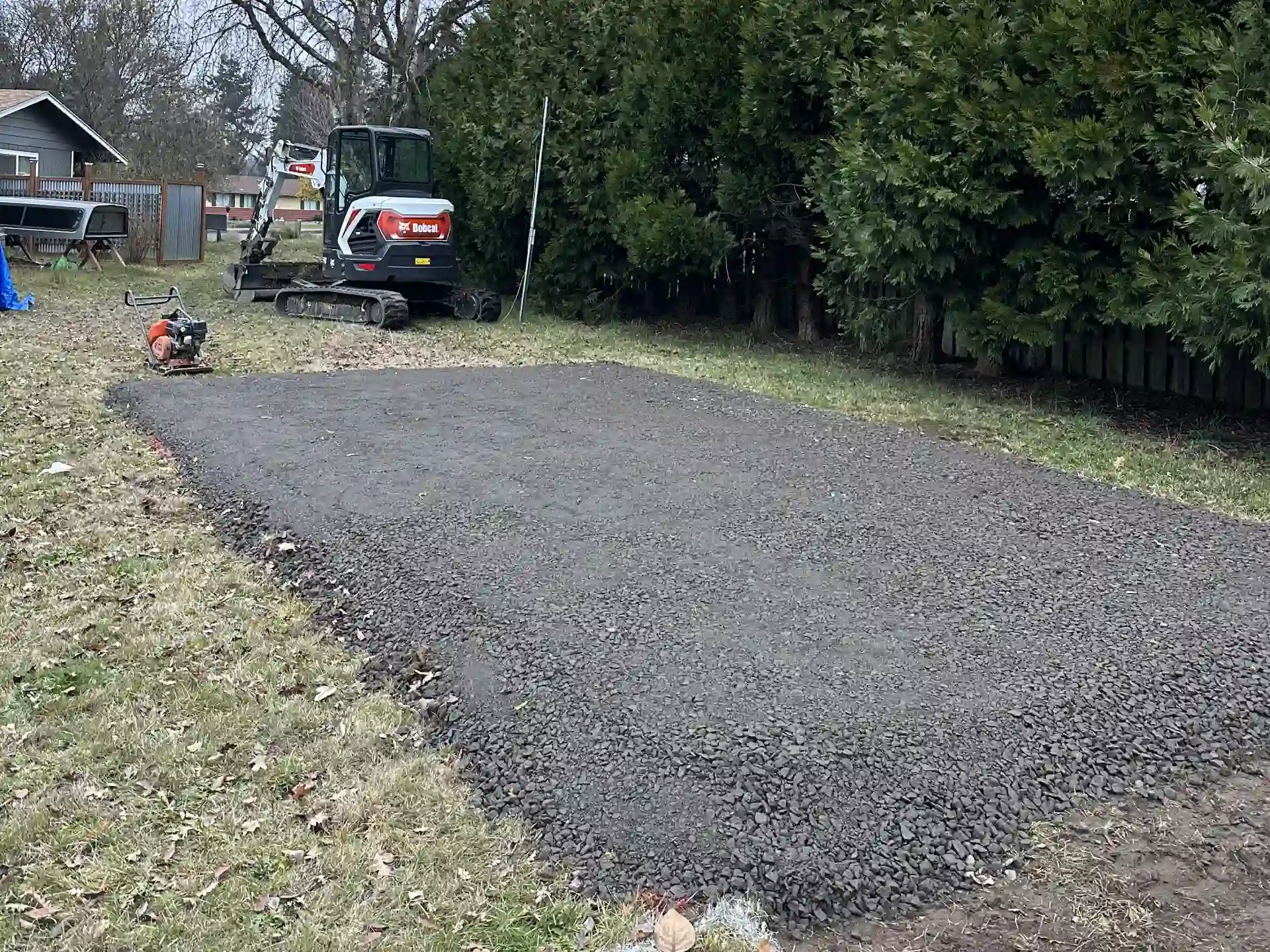
A gravel pad is a compacted layer of crushed rock and base material designed to distribute weight evenly and promote drainage beneath a structure. A properly built pad includes:
- Base layer: coarse, angular rock for strength
- Top layer: smaller gravel or fines for smoothness
- Compaction: tight, level surface for stability
- Drainage: slight slope to allow rainwater to escape
Unlike gravel driveways, a pad is built for static load, not constant traffic, so compaction and leveling are critical.
Choosing the Right Gravel for Your Pad
The type of gravel you choose determines how well the pad drains and holds weight. In Sequim, the soil can be loamy and moist, so angular crushed gravel is best for compaction and stability.
Recommended options:
- Crushed ¾-inch gravel: ideal for load-bearing pads
- Washed gravel: reduces silt that can trap water
- Crushed rock base (2–3 inch): for heavy pads or unstable soil
Avoid round, pea-sized gravel—it shifts too easily and prevents proper compaction.
Proper Site Preparation — The Foundation of a Durable Pad
No matter how good the gravel is, the pad won’t last if the ground beneath it isn’t prepared correctly.
Steps for Site Prep
- Clear the area: Remove vegetation, roots, and topsoil.
- Level the site: Grade the surface to ensure water runs away from buildings.
- Add underlayment: A layer of landscape fabric or geotextile keeps the gravel from mixing with soil and prevents weeds.
- Check slope: A 1–2% grade is typically enough for good drainage.
This early prep determines whether your gravel pad will stay flat for years or begin sinking after a single rainy season.
How Deep and Compact Should a Gravel Pad Be?
Depth and compaction depend on use.
- Sheds / light structures: 4–6 inches of compacted gravel
- RVs or heavy vehicles: 6–8 inches with a compacted base
- Soft or wet soil: may require up to 12 inches of total base
Compaction should be done with a plate compactor in 2-inch layers for best results. Proper compaction eliminates air pockets that cause uneven settling.
Step-by-Step: How to Build a Gravel Pad in Sequim
- Plan your pad: Measure at least one foot larger than the structure on all sides.
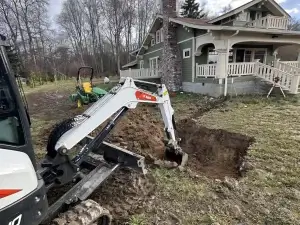
- Excavate the site: Dig to your target depth, removing soft soil.
- Add geotextile fabric: Keeps gravel from sinking into the ground.
- Add base layer: Fill with 2–3 inches of coarse rock, then compact.
- Add top layer: Spread smaller, washed gravel for smooth finish.
- Compact again: Each layer should be tightly packed.
- Edge the perimeter: Optional but helps retain shape over time.
This layered approach creates a sturdy, self-draining foundation that holds up to Sequim’s changing seasons.
Special Considerations for Sequim’s Weather and Soil
Sequim’s coastal climate means more moisture and occasional heavy rains, especially in fall and winter. Pads should be graded slightly to direct runoff away from structures.
Soil composition around Sequim can range from sandy loam to clay — both require a solid gravel base to prevent settling. If the site feels soft underfoot after rain, a thicker base or drainage layer may be needed.
Regular inspection once a year helps keep the pad level. Simply rake high spots and add gravel where needed.
When a Gravel Pad Isn’t Enough
While gravel pads suit most applications, some situations call for concrete or a reinforced base:
- Long-term RV parking or heavy machinery
- Extremely wet or unstable soil
- Permanent buildings requiring frost-proof foundations
Concrete adds cost but offers absolute rigidity. In many Sequim projects, though, a properly installed gravel pad is more than sufficient — and easier to maintain.
Cost Factors and Budgeting Your Gravel Pad Project
Several variables affect the cost of gravel pads in Sequim:
- Type and quality of gravel
- Size and depth of pad
- Access for equipment and trucks
- Excavation or grading needs
- Optional geotextile fabric or edging
DIY installation can save money but requires compaction tools and experience with grading. Hiring professionals like Alpine Earthworks ensures proper slope, drainage, and long-term performance — saving you from costly rework later.
For an accurate estimate, contact Alpine Earthworks for a site evaluation.
How to Choose the Right Contractor for Gravel Pad Installation
If you decide to hire a professional, here’s what to look for:
- Local experience: familiarity with Sequim’s soil and weather
- Proper equipment: excavator, compactor, and trucks for hauling gravel
- Quality materials: angular, washed gravel that compacts well
- Transparent communication: clear quotes and timelines
Alpine Earthworks provides all of these — combining technical expertise with personalized service for homeowners throughout Sequim and the Olympic Peninsula.
Why Choose Alpine Earthworks for Your Gravel Pad Project
Alpine Earthworks is a trusted, locally owned excavation and site work company based right here in Sequim, WA. With years of hands-on experience, they understand how local terrain, rain patterns, and drainage affect every project.
From small shed pads to large RV bases, Alpine Earthworks delivers precise grading, strong compaction, and clean finishes that stand the test of time.
Visit Alpine Earthworks’ website or request your free quote today.
Quick Takeaways
- Gravel pads offer durable, affordable foundations for sheds and parking in Sequim.
- Proper site prep and compaction are crucial for long-term performance.
- Use angular, washed gravel for best drainage.
- Always grade the pad to drain away from structures.
- Hiring a local expert ensures your pad is built right the first time.
FAQs About Gravel Pads in Sequim
1. How thick should a gravel pad be for a shed?
For light sheds, 4–6 inches of compacted gravel is usually enough. Heavier structures may need 8 inches or more.
2. Do I need a permit for a gravel pad in Sequim?
Usually not for small sheds or parking areas, but always check with local building authorities if the pad supports a structure with utilities.
3. What’s the best gravel for wet soil?
Angular, washed ¾-inch crushed rock offers excellent drainage and compaction in Sequim’s damp climate.
4. Can I build my own gravel pad?
Yes, but proper grading and compaction tools are essential. A professional ensures drainage and stability for long-term use.
5. How much does a gravel pad cost in Sequim?
Costs vary by size and soil type, but most range from $5–$12 per square foot, depending on prep work and materials.